Survey Report
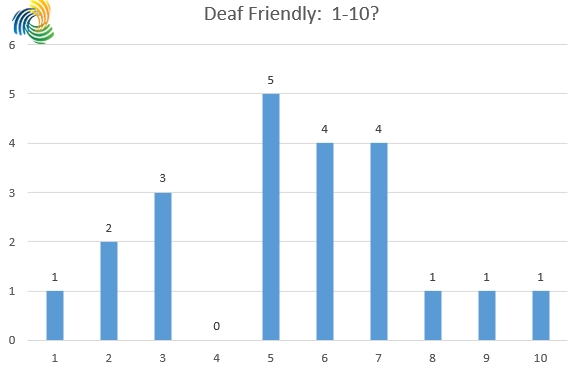
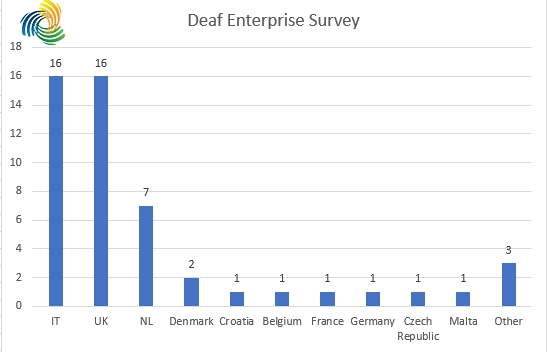
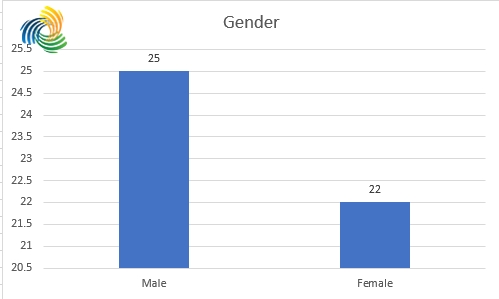
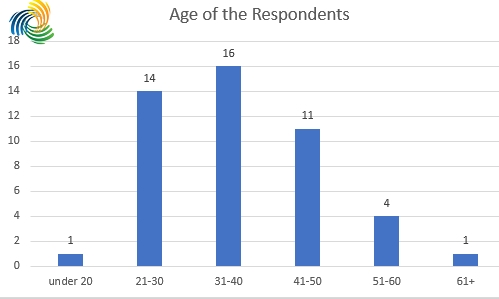
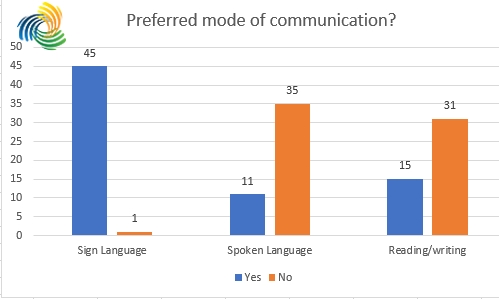
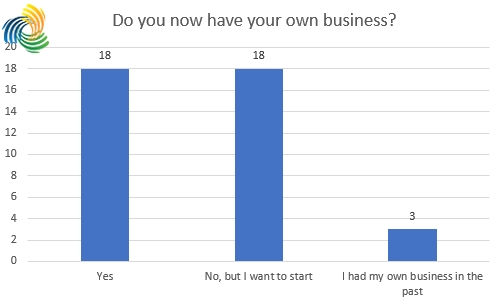
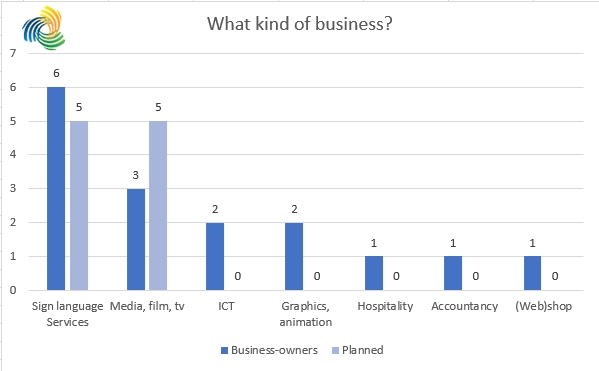
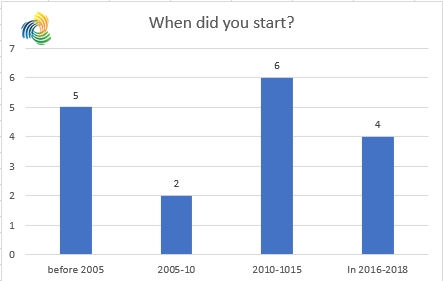
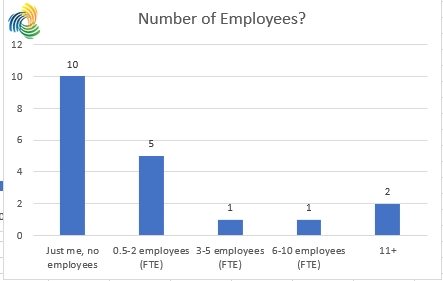
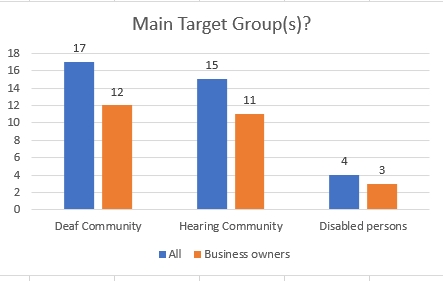
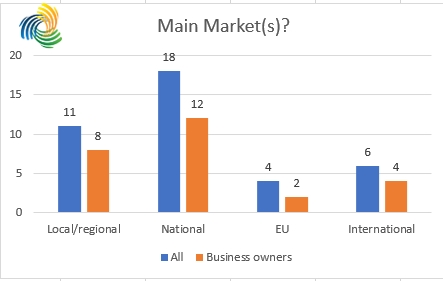
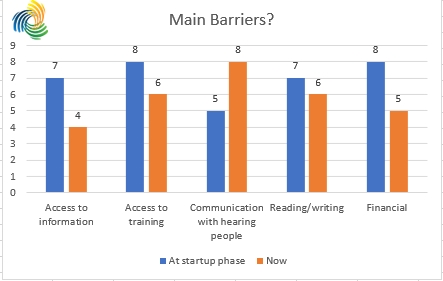
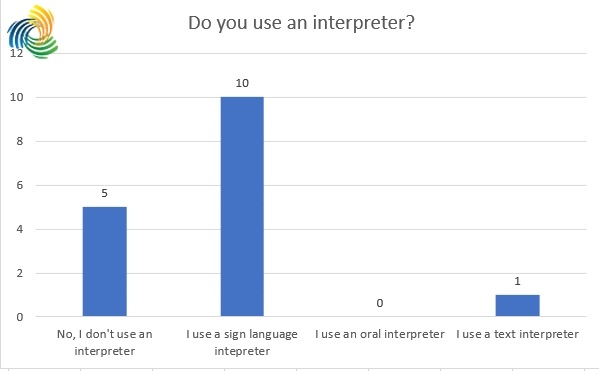
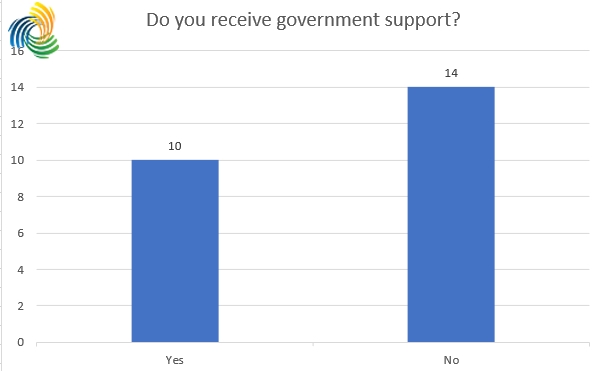
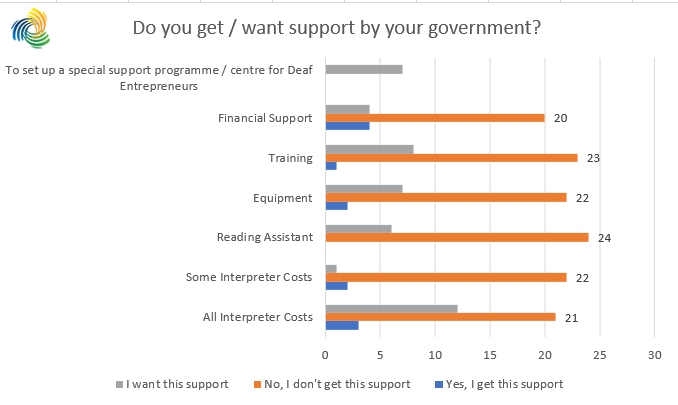
Editor Liesbeth Pyfers Published by Pragma Date September 2018 Project number KA2 2016-1-UK01-KA202-024361 Duration September 2016– August 2018 Website www.deafenterprise.eu Copyright Pragma, Hoensbroek NL All requests concerning the reproduction or translation of all or part of this document should be addressed to Pragma, To all the people who contributed to this report and to the Deaf Enterprise Project, on behalf of the partners of the Deaf Enterprise Consortium Liesbeth Pyfers, 31 August 2018 The Deaf Enterprise project was a pilot project undertaken by a small number of committed partners from 4 EU countries. The project ran from 2016-2018, with partial funding by the Erasmus+ programme (Project Number: 2016-1-UK01-KA202-024361. The objective of the project was to develop and test an Open Educational Resource and a curriculum about entrepreneurship, specifically designed for deaf sign language users. In this report, you will find the results of one of the Project’s activities: the Deaf Enterprise Survey. The overall conclusions of the project, however, are too important to hide them in a final chapter. Therefore, we start this report with the conclusions of the project: Many Deaf sign language users are unemployed or working in unfulfilling and/or unrewarding jobs. At EU level a range of activities has been implemented to support individuals and educators to train potential and beginning entrepreneurs. Entrepreneurship now is a priority throughout Erasmus+ and recognized as a key competence that enables people to develop the skills they need for life and work. To this end, entrepreneurship education strategies generally address active citizenship, social entrepreneurship, venture creation as well as employability (European Commission/EACEA/Eurydice, 2016. Entrepreneurship Education at School in Europe. Eurydice Report. Luxembourg: Publications Office of the European Union). All or most of the mainstream resources in this field however, are not accessible to Deaf sign language users: texts do not meet their reading requirements, videos are not subtitled, examples, tools and other resources are inappropriate or inaccessible. The objective of the Deaf Enterprise project (Erasmus+ Project Number: 2016-1-UK01-KA202-024361, 1 September 2016 - 31 August 2018) was to develop, test and implement an Open Educational Resource (OER) and Curriculum for Deaf sign language users of all ages, that meet their specific strengths as well as requirements. The Deaf Enterprise OER and curriculum was 'made to measure' for and by Deaf sign language users. Because so little was – and is - available for our target group, we did not limit ourselves to young people; the project's output can be used by, or adapted for a wide range of Deaf sign language users: different age-groups, nationalities, interests and backgrounds. At the start of the project, very little was known about deaf entrepreneurs in the EU member states. Although there had been a few EU supported projects about employability and deafness (see the Deaf Enterprise website for details), our project was the first of its kind to focus on deaf people who have started, or wanted to start their own business. How many deaf business owners are there in the member states of the EU? What kind of businesses do they have? Are there any specific barriers that they have to deal with, and if yes: what are these barriers? And: how do deaf sign language users deal with these barriers? Are these barriers – and solutions – the same across the board, or are some specific to certain trades or countries? Answers to these questions would help us to develop a curriculum that would take the specific situation of deaf people into account, instead of, or in addition to, using what is known about mainstream entrepreneurship. Answers to these questions would also be useful to inspire and inform deaf sign language users, interested in setting up their own business. Last but not least, answers to these questions would help us identify structural barriers that deaf entrepreneurs have to deal with in one or all EU countries and might help point the way to solutions to help deaf entrepreneurs in all EU member states. The Deaf Enterprise project used three different paths to find answers to these questions: Other results of the project: the Deaf Enterprise Curriculum and the reports of the Deaf Enterprise Workshops can be found on the project’s website. The target group for the Deaf Enterprise Survey were deaf sign language users in EU member states who had started their own business or were planning to do this. Requirements for the Survey questions therefore were: We divided the Survey into four parts: See the appendix or the website for the questions and the translations. We translated the questions into International Sign and British Sign Language, as well as in 3 written languages: Danish, Dutch and Italian. The International Sign translation was made by Frankie Picron of the European Union of the Deaf. The BSL translation was made by Luigi Lerose of UCLan. Number of Respondents, per country We used our networks and social media to disseminate the Survey. The total number of responses by the end of the project, was 50. In the table, you can see where the respondents live. Unfortunately, the number of responses does not allow us to compare countries, or subgroups of respondents. Other countries: Ethiopia, New Zealand, and unspecified. Since our main interest is on the EU member states, we have not included the 3 respondents from ‘Other’ countries in the remainder of this report. We assume that there are several reasons why the response rate is low: The number of men and women who responded is almost equal: 25 men, 22 women. To make sure that our respondents were indeed deaf sign language users (instead of hearing sign language users or hard-of-hearing persons), we asked the respondents for their hearing status. One person indicated that he/she was a hearing person. We removed his/her data from the survey. All other respondents answered that they were deaf. The majority of the respondents is between 20 and 40 years of age, so fairly young. Four of the respondents are between 51-60, 1 is 61+. For this question, respondents could indicate both “yes” and “no”. It is important to note that we asked for the preferred mode of communication; we did not ask about the ability of the respondent to communicate in sign language, spoken language, and/or reading and writing. All of the respondents prefer sign language, only 1 respondent says “no” to sign language. 35 respondents indicate that they prefer not to use the spoken language whereas only 11 do. 31 respondents indicate that they do not like to use reading and writing for communication, whereas 15 respondents say they do use reading and writing for communication. It is clear that the majority of the respondents are indeed sign language users. We did not ask more detailed questions, for instance whether the preferred mode of communication depends on the communication partner, and/or the communicative situation. We asked the respondents whether they currently owned a business, owned a business in the past, or were thinking about starting a business. Less than half of the respondents had their own business, now or in the past. Others were thinking about starting a business. For some of the remaining questions, we will report the results for the actual business-owners separately. We gave the respondents a number of alternatives to choose from; since some options overlap, someone can be in sign language services and media and tv for instance, respondents were allowed to select more than one option. In the table, you can see the numbers for the respondents who have or had established their own business (dark blue) versus the entrepreneurs who are planning to set up their own businesses (light blue). From the responses, it is clear that many deaf entrepreneurs are involved in sign language services. This can be translation services, interpreting services, sign language teaching, mediating services, accessibility for sign language users, etc. These entrepreneurs have made their first language, a sign language, into their unique selling point: they are sign language users themselves, they know the target group, there are no barriers communicating with the target group. Although the numbers are small, entrepreneurs planning to set up their own business seem to favour Sign Language Services, and Media, Film & TV. In the past, deaf people were usually trained for professions where they would have no or limited contacts with the mainstream, hearing population. This has changed. Based on formal and informal interviews and internet searches we know that there are also many deaf entrepreneurs who have built their business on the visual skills of deaf people: they are photographers, designers, graphic artists. Again, partly based on our survey but also on the basis of our interviews and net searches, we know that deaf sign language users have their own restaurant or bar. Several of these use sign language as their main promotional factor. Many deaf business owners can use their knowledge of sign language is an asset. Nevertheless, many deaf business owners target hearing markets, see below. 7 respondents started their business before 2010, 10 after 2010. Unfortunately, the numbers are too small for any conclusions. Most of the respondents own Small or Medium sized businesses, with no or a maximum of 2 employees. Only 2 respondents indicate that they have more than 11 employees - We asked the respondents who the main target group of their business was, and gave them 3 options: the deaf community, the hearing community, and ‘disabled persons’ in general. Respondents were allowed to select more than one option. In the table, the blue bars show the responses from all respondents, the orange bars show the number of respondents who indicated in an earlier question that they currently own their own business or did so in the past. The main target group is the Deaf community, both for established businesses and respondents planning to start a new business. The hearing community is a close second. Responses show that many respondents provide services that mediate between deaf and hearing persons, e.g. by offering translation or consultation services. Few businesses target disabled people in general. We asked the respondents what their main market was, again giving them a limited number of options: local/regional, national, EU and international. Respondents were able to select more than one option. In the table, the blue bars indicate the numbers for all respondents, the orange bars show the numbers for the respondents who currently have their own business or did so in the past. The responses show that most respondents work nationally. Especially for businesses targeting the deaf community, this makes sense: the number of deaf people is small and probably too small for most businesses that only target a local or regional market. The number of deaf business owners that work across the EU or wider is very small (EU: 2, International: 4). In the table are the results of two questions: barriers during the start-up phase of the business (blue), and barriers at his point of time (orange). During the start-up phase, almost all of the options that we offered were selected (respondents could select more than 1 option). After the start-up phase, communication with hearing people is the main barrier. Most of the respondents use a sign language interpreter. Only 5 respondents indicate that they do not use an interpreter. We did not ask respondents to explain their answer. Respondents may not use an interpreter because they do not need one, or because they cannot afford one. The next questions offer some more information about this. The majority of the respondents do not receive any support. For this question, respondents could indicate for each form of support whether they were receiving this (blue=yes, orange=no), and whether they wanted to receive this support (Grey). It is clear that the respondents received very little support (orange). The main wish is for the government to pay for all interpreter costs.. To get a general impression of how "Deaf Friendly" the EU member states are for deaf entrepreneurs, we asked the respondents for a grade on a scale of 1 - 10 ? 0 = not at all Deaf Friendly! 10 = VERY Deaf Friendly, couldn't be better! The table shows a normal distribution, with most respondents choosing 5, 6 or 7. Unfortunately, we did not have enough responses to use the results to compare between countries. Do you want to comment on this grade? (open question) Colofon
This email address is being protected from spambots. You need JavaScript enabled to view it..
 The Deaf Enterprise Project has been funded with support from the European Commission. This publication reflects the views only of the authors, and the Commission cannot be held responsible for any use which may be made of the information contained therein.
Foreword
A very big THANK YOU!
Introduction & Conclusions
1. The Deaf Enterprise Project
2. The Deaf Enterprise Survey
The Questions
Translations
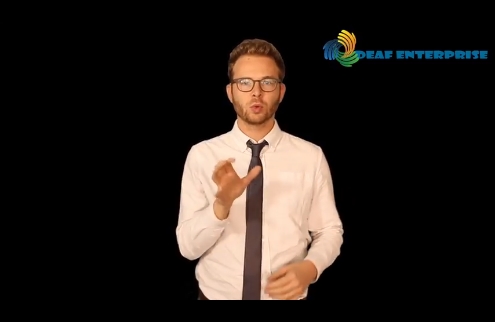
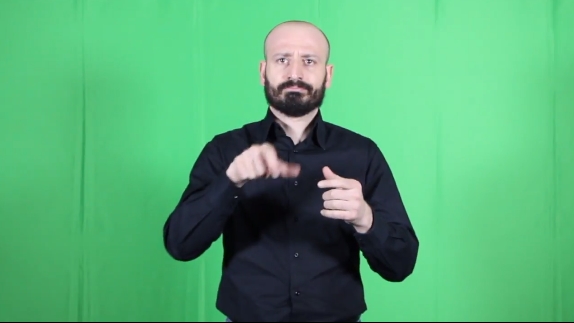
3. Results: The Respondents
Gender
Hearing Status
Age
Preferred Mode of Communication?
4. What Business?
Do you now have your own business?
What kind of business do you now have?
When did you start your current business?
How many employees do you have (full-time equivalents)?
The main target group(s) of your current business?
The main market(s) of your current business?
5 Results: Barriers & Support
When you first started your current business: what were the main barriers?
At this point, today, what are the main barriers for your business?
For your business: do you use an interpreter (sign language, sign supported speech, oral or text)?
For your business: do you now receive support from your government / social services?
For your business: what support would you like to get from your government / social services?
Overall, in your opinion: how 'Deaf Friendly' is your country for Deaf Entrepreneurs, on a scale from 0 - 10?